
Enter once
All key details in one clear process.
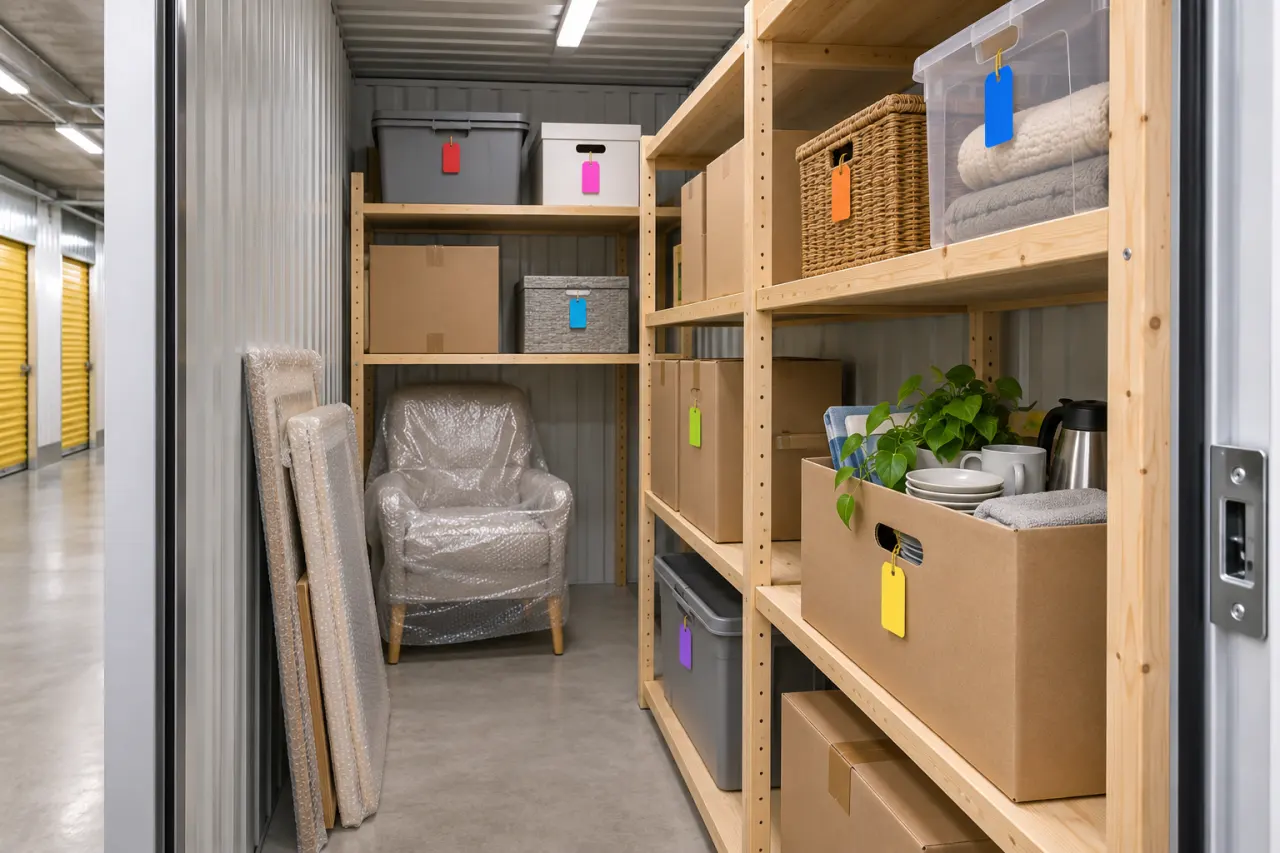
Storage in Windisch (canton AG): we agree the scope, access to your property and a suitable date with you. When moving-out and moving-in dates do not align, temporary storage can bridge the gap. Tetrismove can plan collection, storage and later delivery of household belongings on request. Volume, duration, packing and access requirements are clarified together. The quote records agreed services; it does not automatically provide unrestricted access to a self-storage unit.

All key details in one clear process.
Route, access and services described clearly.
Moving and cleaning in every region.
Review the services and price before booking.
For work in Windisch in canton AG, the exact address and access to the property are essential. Provide the floor, usable lift, key handover arrangements and a reachable contact. Photos of rooms, stairs and work areas help establish the scope. Check with the property manager whether working hours, access or the use of shared areas need to be agreed.
The table distinguishes postal localities from the municipality. The correct postcode and house number avoid confusion, particularly where a municipality contains several localities. Include the entrance, any rear courtyard and a reachable contact person. The service is planned for your address; this page describes a service area and does not identify a branch office.
| Postcode | Locality | Address details needed |
|---|---|---|
| 5210 | Windisch | Add the street, house number and building entrance |
The table lists postal locality areas whose building addresses lie predominantly within this municipality. A postal area can span more than one municipality. The full address is needed to plan your booking. Source: Federal Office of Topography swisstopo · data dated 01 October 2026
Explain whether the rooms will remain occupied or in use during the visit. Personal belongings, pets, sensitive workstations and other contractors affect the sequence. Any additional transport, clearance or property handover is coordinated separately. The complete address and your task list are the starting point; a postcode alone does not describe the condition or work required.
Treat transport into storage, the storage period and final transport as three connected operations. Comparing only a monthly charge misses part of the job. Establish when the old home must be empty, when the new one becomes available and how firm those dates are. Renovation may leave the duration uncertain. Give a realistic estimate and ask how extensions are arranged. Later delivery requires staff, a vehicle and agreed access again. Having the keys to the new home therefore does not automatically mean your goods can leave storage that same day.
List furniture and boxes separately. Photos and external dimensions of large items help assess volume. Flag glass, delicate finishes, upholstery and existing condition. Put items you may need during storage on a separate list. Clear numbering connects the inventory to the packages. Avoid labelling every box “miscellaneous”: a contents category and final destination room are more useful. Keep your own copy. It provides a record of what remains stored, what has been collected and what has already been delivered if plans change.
Items should be clean, dry and prepared for the intended period. Damp fabrics, wet appliances and food should not be included in furniture storage without clarification. Discuss liquids, batteries, temperature-sensitive items and other unusual requirements before confirmation. A general enquiry does not authorise hazardous or prohibited substances. Manufacturer instructions matter for appliances and delicate materials. Empty and clean suitable appliances according to those instructions, then allow them to dry thoroughly. The correct treatment depends on the item; one packaging method is not suitable for every surface and piece of furniture.
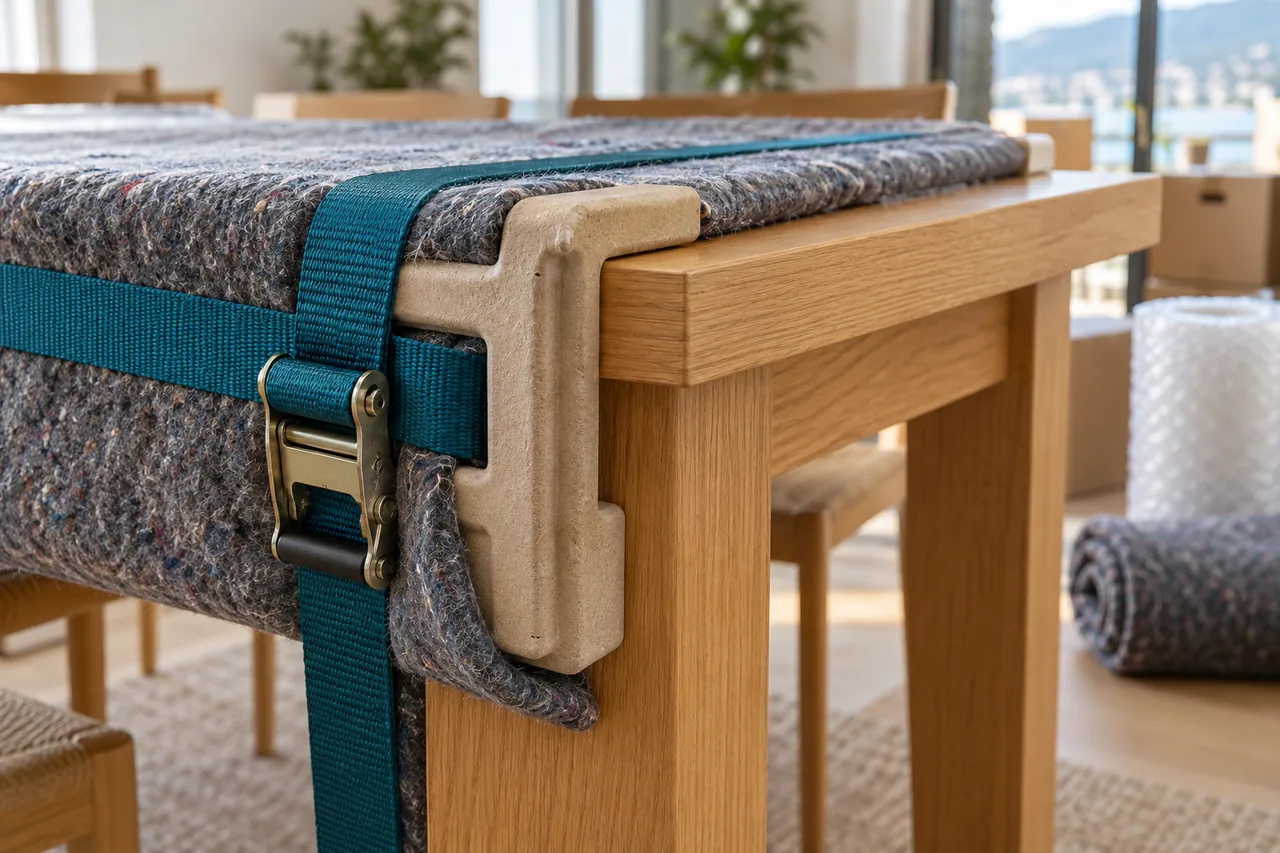
Transport and longer-term storage have different requirements. Protect edges, use suitable covers for delicate surfaces and identify small loose components. Agree packaging with the material and storage conditions in mind. Wrapping everything airtight is not a reliable universal solution. Keep fittings associated with dismantled furniture; photos before disassembly help with rebuilding. Boxes should be sturdy, not overloaded, and labelled clearly on several sides. If you need intermediate access, that requirement affects how belongings are separated and organised from the packing stage onwards.
Managed temporary storage may operate differently from a self-service unit. Ask how individual items can be released, how much notice is required and what costs apply. Do not assume spontaneous access unless it is expressly agreed. Keep medication, important papers, identification and frequently used belongings outside storage. Planned partial collections may work for tools or seasonal equipment. Every removal changes the inventory and possibly final delivery. Confirm changes clearly so items already taken out are not mistakenly treated as still stored.
A useful quote separates collection, packing, handling into storage, ongoing charges and redelivery. Ask how chargeable space is measured, which billing period applies and how partial periods are treated. Clarify minimum duration, extensions, notice for removal and additional handling. A general statement about secure storage does not define particular insurance cover. For valuable or delicate items, review the agreed liability, insurance and any documentation requirements. The actual terms matter. An isolated price is difficult to compare with a complete service package.
Once the destination and date are confirmed, provide floors, lift details, loading arrangements and desired furniture positions. Access may differ substantially from collection. A sofa that entered storage easily may not fit the new staircase. Check critical dimensions before the removal date. Decide whether everything should arrive together or in stages and whether reassembly is required. At delivery, compare the inventory with the units received. Record visible issues and outstanding work together before completing handover.
Staged collection or return may help when rooms become available at different times, but it requires suitable sorting. Do not mix belongings for different delivery stages randomly in one box. Identify first and later delivery groups while packing. Renovation can create dust, moisture and delays; confirm the destination room is ready for furniture. Returning items too early can create another transport requirement. Coordinate delivery with the tradespeople and access arrangements without treating the storage service as construction supervision or a guarantee of building completion.
Beyond volume and duration, mention very heavy items, fragile materials, unusual dimensions, an uncertain move-in date and planned intermediate access. Describe the real requirement rather than “a few pieces”. If photos or information are missing, identify those open points. Storage confirmation should rest on assessed conditions. Extra volume, another collection address or changed storage requirements may require a revised agreement. A full inventory and clear schedule turn a temporary solution into an understandable process covering collection, storage and return.
An enquiry does not need to be perfect, but it should distinguish confirmed details from missing information. Photograph each room as a whole, then the items or access points needing special attention. One close-up often fails to show an object’s size or the handling route. Add height, width and depth, noting any removable parts. Personal papers, screens and other confidential information do not need to appear in the photographs.
For uncertain details, write “to be checked” rather than presenting a guess as fact. This may apply to lift dimensions, vehicle access, weight or an unconfirmed key date. A short list of outstanding questions can then be worked through systematically. Organise information by address and room so photographs are not assigned to the wrong location. Clearly identify later additions and removals. An updated complete list is more helpful than many conflicting individual messages. Keep the latest confirmed version with the quote as a shared reference for everyone involved in the work.
Consider other people who continue using the building. Entrances, stairs and lifts cannot simply be blocked for the work. Check with management or the responsible people which areas may be used temporarily and which must remain clear. A reserved time window only helps if those affected know about it. Have the doorbell name, key access and contact details ready.
Remove loose obstacles from the agreed routes where you are authorised to do so. Do not improvise by shifting heavy or fixed components merely to widen a passage. Delicate floors or recently treated surfaces need suitable protection discussed in advance; not every tape or covering suits every material. Report known damage so the starting condition can be distinguished from later observations. Children, pets and uninvolved people should use another safe area during heavy handling. Also establish where packaging can be placed temporarily without narrowing access or escape routes. These arrangements concern the actual building, so generic assumptions about unrestricted access should not replace an on-site agreement.
An offer is understandable when every important task has a clear place. Distinguish the main work, expressly requested extras and tasks handled by you or other parties. An unexplained “all inclusive” statement is less useful than a practical list. Ask about terms to which you might attach a particular meaning, such as dismantling, assembly, packing, cleaning, waiting time or special equipment.
The quote should match the quantities actually discussed and the known access conditions. Check whether a date has only been requested or already confirmed, and how changes should be reported. Cost items should distinguish fixed elements from additional work still requiring assessment. Payment arrangements and tax treatment should also be clear from the documents. A phone call may resolve a detail quickly, but important changes should then appear in a shared written version. You and the people carrying out the work will have the same basis when the job starts, instead of relying on different recollections of an earlier conversation.
If you cannot stay for the whole job, appoint a representative in advance. They need access, the current scope and clear limits on what they may decide. They should know the sensitive points and which changes require your agreement first. Leaving a key alone does not answer questions about quantities or placement. Explain how you can be reached during the agreed window as well.
A short joint walk-through is useful at completion. Compare the agreed scope with the work performed, describe outstanding points precisely and identify a responsible person. A factual note naming the location and item is more helpful than a vague recollection. Sign only a description you understand and keep the associated records. If a question arises later, the reference, date and a precise explanation make it easier to connect it to the correct enquiry. A clear handover needs shared observations and identifiable next steps rather than complicated wording.
| Stage | Information needed | Check in the quote |
|---|---|---|
| Collection | Address, quantity and access | Transport, staff and packing |
| Intake | Inventory and unusual materials | Acceptance terms and space |
| Storage | Duration and possible extension | Billing period and conditions |
| Interim access | Items needed and dates | Notice, arrangements and cost |
| Redelivery | Destination, date and furniture plan | Removal, transport and assembly |
A reliable quotation starts with a complete scope. Property size and distance alone are not enough: volume, access, timing, materials and additional tasks determine the team, vehicle and time needed. Tell us which preparations you will handle yourself. Compare quotations by checking that they cover the same rooms, items and carrying routes.
| Factor | Details needed | Why it matters |
|---|---|---|
| Volume | Inventory, photographs, rooms and additional areas | The actual quantity determines the resources required. |
| Access | Floor, lift dimensions, carrying route and loading space | The route affects time and equipment. |
| Date | Preferred date, handover and alternatives | The sequence and everyone involved need to align. |
| Your preparation | Packed boxes, disassembly and prepared rooms | Clear responsibilities avoid duplicated or missed tasks. |
| Additional work | Cleaning, packing, assembly, storage or disposal | Each addition needs a defined scope and position in the schedule. |
Also agree what happens if something changes: extra furniture, an unreserved lift or delayed access to the destination can affect the schedule. A written scope makes these differences easier to discuss. Binding prices and dates are set out in your individual quotation; example images and checklists do not promise a fixed package for every property.
Tick the points you have already clarified. This personal checklist is not submitted.

Describe the volume, collection and delivery addresses, and your preferred date. We clarify open points and record the agreed services in writing.
044 505 14 14That depends on the agreed storage arrangement. Managed temporary storage is not automatically unrestricted self-storage. Confirm collection procedures, notice and costs beforehand. Keep frequently needed items with you where possible.
It depends on furniture dimensions, box quantities, packaging and possible stacking. An inventory with photos is more useful than home size alone. The actual space requirement is assessed for the quote.
Tell us early. The duration, capacity and cost of an extension need agreement. Redelivery also requires a newly confirmed slot; it does not automatically move with your property handover date.
Only where the quote expressly says so. Check collection, packing, ongoing charges, interim removals and delivery separately. This distinguishes fixed services from costs that depend on duration or later changes.
Number the boxes and keep an inventory. If the agreement allows access during storage, have items you may need placed near the entrance. Confirm how to arrange a visit and what a partial delivery would cost before the goods go into storage.
Describe the volume, collection and delivery addresses, and your preferred date. We clarify open points and record the agreed services in writing.